

Center for Excellence in AIDepartment of Radiation Oncology
Pioneering AI and machine learning solutions to transform radiation oncology, improve cancer care, and enhance patient outcomes.
Latest News & Updates
Recent achievements and announcements from our faculty and research teams.
Projects at a Glance
A curated snapshot of the programs shaping safer, smarter radiation oncology.
Quality & Safety
AI and ML projects that elevate precision, safety, and reliability in care delivery.
- •AI automated contouring
- •AI automated treatment planning
- •ML for adaptive radiotherapy
Reducing Side Effects
Clinical AI designed to predict and prevent toxicity throughout treatment.
- •AI-based functional imaging
- •Toxicity risk modeling
- •Dose and response prediction
Improving Cure Rates
Machine learning that strengthens detection, decision support, and outcomes.
- •Early detection AI
- •Treatment response modeling
- •Prognostic signatures
AI & ML Education
Training clinicians, physicists, and students to apply AI in real-world care.
- •NVIDIA-certified training
- •Residency curriculum integration
- •Student AI projects
Meet the Team
A curated view of the clinicians and researchers advancing AI in radiation oncology.
Dr. Adam P. Dicker, MD, PhD
Enterprise Sr. VP, Chair and Professor
Director, Jefferson Center for Digital Health
Dr. Yevgeniy Vinogradskiy, PhD
Professor, Director of Medical Physics, Vice-chair of Radiation Oncology
Co-Director, Center for Excellence in AI
Dr. Wenyin Shi, MD, PhD
Professor
Leading research on radiomics and machine learning for brain tumors
Dr. Wookjin Choi, PhD
Computational Physicist, Assistant Professor
NVIDIA Certified Instructor for Fundamentals of Deep Learning
About the Center
Building clinically grounded AI that improves safety, outcomes, and access across radiation oncology.
AI in Radiation Oncology
The development and integration of artificial intelligence (AI) and machine learning (ML) have been a programmatic focus for the Department of Radiation Oncology since 2020. Jefferson Radiation Oncology faculty have successfully developed and integrated AI and ML methods to improve cancer patients' quality, safety, and clinical outcomes.
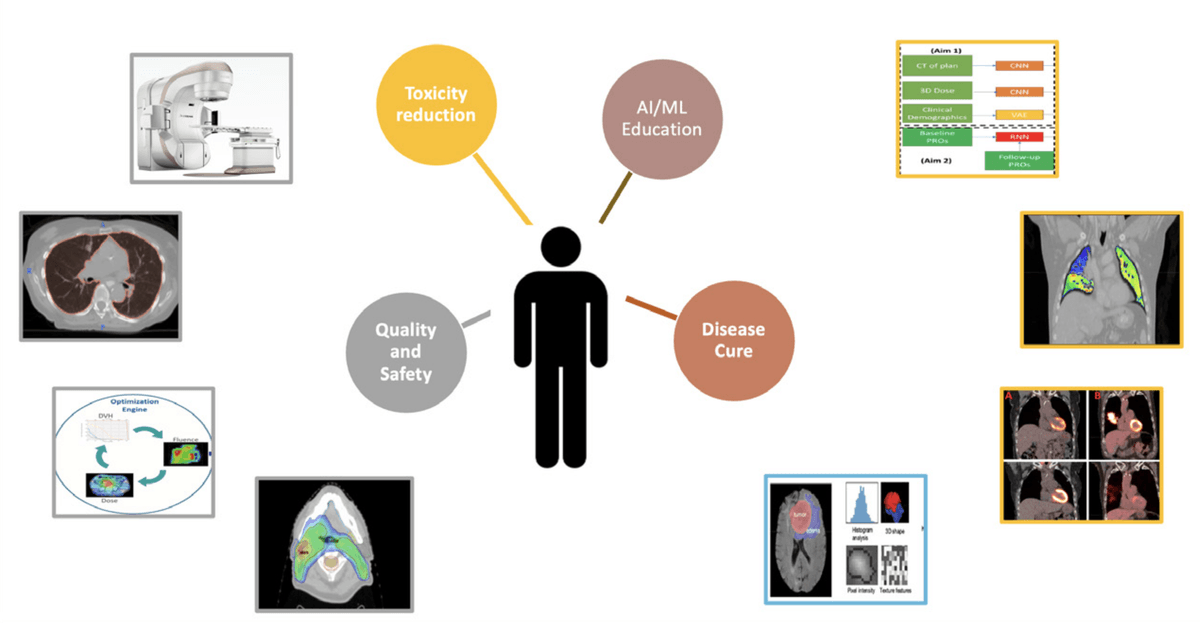
Patient-centered AI approach for radiation therapy planning
Computational Infrastructure
The department has established a computational framework for developing AI and ML algorithms and has emphasized AI and ML expertise in faculty and trainee recruiting. AI and ML initiatives have improved patient care, efficiency, and academic productivity.
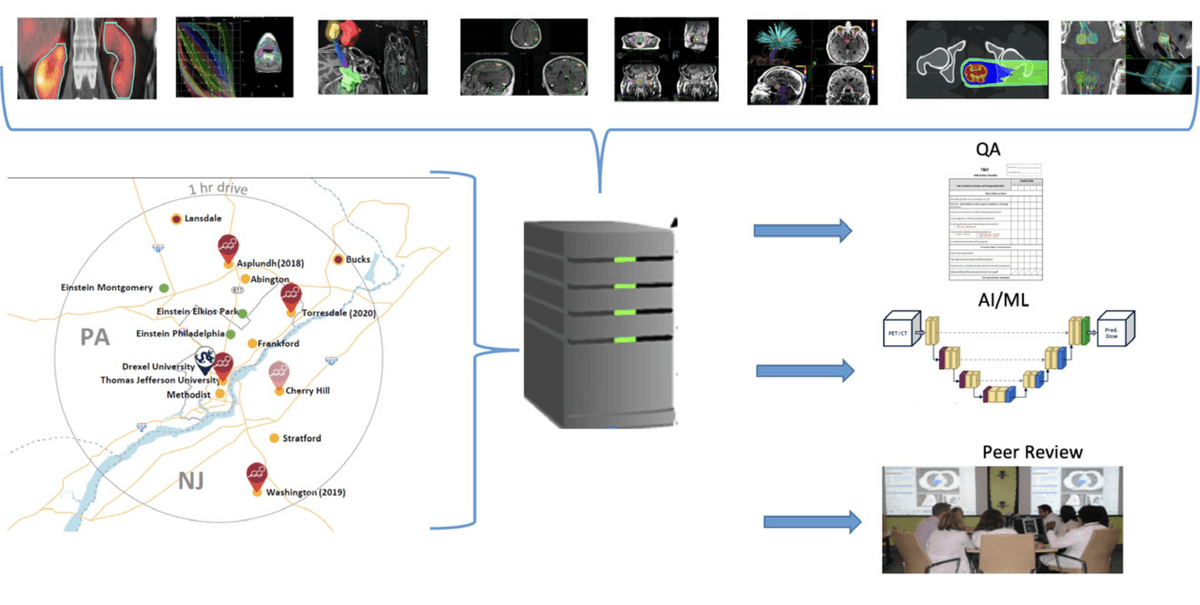
Advanced computational infrastructure supporting AI research
Research Impact
The Radiation Oncology faculty has 11 AI and ML-related grants totaling over $8 million, with funding from NIH, NCI, AHRQ, MIM Software, Varian, Elekta, ACS, and SKCCC. The program has 4 prospective clinical trials and 15 invention disclosures.
$8M+
in AI-related grants
11
active AI/ML grants
4
prospective clinical trials
15
invention disclosures
Our Partners & Collaborators